Showing posts with label International Business: Int.Business Strategy. Show all posts

Sunday, 19 October 2008

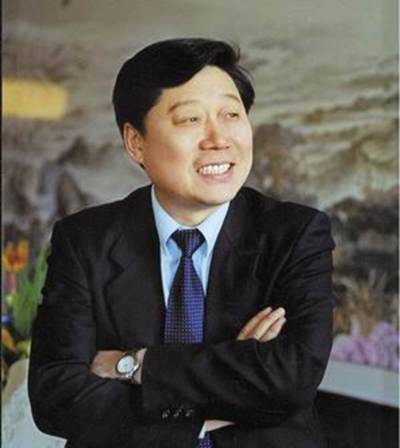
Zhang Ruimin(2007)Raising Haier


This is a history of Haier and Zhang Ruimin, the Chairman of Haier. The article describes Haier’s developing from beginning to now. It is interesting as a biography of successful manager. But it is not informative for our exam.

Now, he thinks three things:

1, Worker’s satisfaction. Matching worker’s value and the company’s.
2. Customer-driven personnel evaluation.
3. Product differentiation. Short-term(three years), and long-term(breakthrough)

They have customer-driven evaluation system: workers are evaluated by performance of their team, not by individual.


He thinks the gap between Haier and foreign companies is management talent not technology. They try to make workers have self-leadership.

(URL:http://www.kreaprenor.se/imimarkos/index.asp?g=1&r=13)

Saturday, 18 October 2008

Orit Gadiesh, Philip Leung, and Till Vestring(2007) The Battle for China’s Good-Enough Market


This is overview of Chinese market in the view of Multinationals. The conclusion is “company which wins in Chinese Good-Enough(=middle class)market, wins in the World”.

In Chinese market, there are three segments: Premium, Good-Enough, Low-End. Good-Enough means its products are reliable quality and low price. The market is difficult to catch up because it is changing rapidly. But it is growing now and its share was 62% in 2005. Multinationals in China usually positioned Premium, because there they could get high margin with their brands. And local companies positioned Good-Enough and Low-End, because they can produce at low cost. However, the situation is changing now. Chinese companies in Good-Enough position are becoming more and more sophisticated and will threaten global market with leverage of Good-Enough market. To maintain its position, multinationals have to enter Good-Enough market through developing lower producing and careful marketing or M&A.

(URL:http://www.hbsp.harvard.edu/hbsp/hbr/articles/article.jsp;jsessionid=GRAPVRSH1BXZYAKRGWDR5VQBKE0YIISW?ml_action=get-article&articleID=R0709E&ml_page=1&ml_subscriber=true)

Wednesday, 15 October 2008

Haier: Taking a Chinese Company Global (HBS9-706-401)


This is a case of a multinational company, Haier, the biggest Chinese white goods manufacturer. This paper describes Haier’s history and expansion foreign market.

Analyzing Hair’s strength, these are:

In Chinese market:
Reputation; Brand, 20% more than its competitors
Distribution: Speedy and less-inventory
Rapid response: 42 distribution centers
After Service: 5,500 independent contractors
Low labor manufacturing: one tenth of U.S

In foreign market
Product Response: 18 design center and seventeen hours working model.
Product differentiation: close attention to customers
(Reputation: selling U.S or EU)


Haier’s strategy and strengths are clear and so theoretical. Thinking roughly, it is better to keep Chinese market and present position with niche production or exploiting its distribution in China. And develop new technology for next generation of home appliances.

(URL:http://www.haier.com/index.htm)

Sum-Up, Evaluation and Exam Distribution

Today was the last lecture of International Business: Int. Business strategy. In the class, teacher reviewed whole course, and hand out take-home exam.

He emphasized “International Strategy” and “Uppsala model”. It is difficult to define the difference between international strategy and domestic one. But, there are five differences: greater scale and scope, more alternative for configuration of value-added activities, greater difficulty to coordinating but it has competitive advantage, cultural and linguistic similarities or differences, national economic factors. It was interesting for me because we have to think non-economic value such as culture.

About “Uppsala model”, there are two point: Firm starts neighbor countries, incremental local learning.

Through the lecture, I learned fundamental view of strategy and skill to make it. I will use the knowledge in the exam.

By the way I misunderstood “hand out” and “hand in”…I have prepared exam…

Monday, 13 October 2008

International Strategic Management in Practice Strategy Consultancy: An Example of a Modern General Approach and of What It Is Like to Be a Junior C


Today’s class was guest lecture from a big consulting firm. There were two guests; one was a manager, and the other was a senior associate. The manager shows us how to make strategy; that is how they are working as consultant. The senior associate told his experience in first a few years in his firm.

The lecture was meaningful for us because we saw how theories are applied real business situation. The manager showed us some business packages of strategy making such as 4 month plan, 4 weeks project, 2 days workshop. Each packages consisted of 4 steps: strategic foundation, choices, mobilization, and delivery. Theories have changed tools and support analysis to make date clear and reasonable. On the other hand, the packages spent a lot of time working together through discussions and workshops. I think it is because process to carry out strategies is more important than strategy itself. They are only facilitators to give useful date and tool authorized by theories, not strategy makers.

Through the lecture, I got to know two things. First was “theory is only tool, not answer”. In the business process presented in lecture, area where theories applied was so small. Theories are only tools to make hypothesis, to see presence, to limit view, to support answer. Second was difference of value between governments and consulting firms. Governments works because of their authorities. Therefore, people working in governments do not need to develop some skills to get money. On the contrary, consulting firms works their individual skills because there are a lot of competitors in firms and outside firms. Because of that, they have to develop their skills and it promotes study of business and production of skills and frameworks in the business world.

URL:http://www.bain.com/bainweb/publications/publications_detail.asp?id=15302&menu_url=publications_results.asp

Thursday, 9 October 2008

International corporate environment


Today’s class was lecture about FDI, one area of political economy. Usually, the class is taken twice; starts 8:30 a.m. and 10:30 a.m. But, today’s class was only once; from 9:00a.m to 12:00p.m. This is why students attended class were different.

Lecturer was Ari Kokko, a professor of SSE, and experienced advisory of governments. The lecture was exciting because he told us some examples of FDI that he worked as advisory, even if the contents is only fundamental view of FDI. In addition, taking political influence to business for granted was meaningful for me because I will work in the government in Japan. Japanese government, is often criticized its excessive interventions to economy, is not only one, I thought.

Lecture was summarized as this: FDI is so influenced governmental policy of host and home country. And these influences are often political, not economical. Most important influence is spillover; positive and negative. Spillovers include technology, reputation of country, employment, environmental effect and so on. However, because of the globalization of trading policy from WTO, options of policy are getting narrow. In that time, education is most important of all countries because free education is only non-regulated subsidy. Ultimately, most important question is “What kinds of job remains in the home country?”.

I felt political economy was so interesting to study, I hope to study more in future.

URL:http://www.idrc.ca/en/ev-30979-201-1-DO_TOPIC.html

Monday, 6 October 2008

Hybrid MNCs


I have not attended classes for a week because I had to get back to Japan for job interview and the ceremony. Because of the long absence, I felt hard to catch up with the class, and I could not contribute class discussion.

Today’s Case was about Li & Fung, multinational clothes and toys company which originated in Hong Kong. Li & Fung’s business model is unique because it does not own its factory or store or natural resources. It acts in several place of value chain and make money though optimization the whole chain; with no-inventory, flexibility, and so on. Moreover, the activities are driven by customer value or satisfaction, with structure of organization and system of evaluation.

The lecture started with describing business model of Li & Fung by three students. The students wrote almost same picture and they were well. But I thought last one was best because it was so visual, and funny, and what’s more, explanation was good. I understood what is important in speech was calmness and emphasizing points of the opinion.

From this lecture, I got three things; figure, view as industry, and factor analysis. Figure means to judge and compare with number such as 3.5% margin comparing 1%, 5 weeks vs 3 months. Second means to have other view to see case; for example, firm level, industry level( of course, there are many dimensions of industry), country level, and so on. It provides valuable opinion and thoughts I believe. Last was about MECE. In every lecture, professor shows us the factors that we do not point out. If we have some framework or analysis of factors, we would fill all the factors.

Back to the Li & Fung, its point of business were: co-produce with customers, knowledge and information as competitive advantage, customer driven organization, support player of value-chain. I think this is just business model of 21st century, and in future, companies will change as this.


URL:http://www.market-modelling.co.uk/MMS/MMS_ValueChain.htm

Saturday, 4 October 2008

Henry Mintzberg (1994)”The Fall and Rise of Strategic Planning”


This is a bit strange article for HBR, which usually shows us useful framework or systematic thinking. The article does not tell us utilities of frameworks but mistakes to depend on them. And finally, it says that useful frameworks weaken our thoughts.

“Strategic Planning”, as he says “strategic programming”, is the way to make strategy without doing or seeing its activity. The “strategy” contains schedule, budgets, target figure, and so on. However, he criticizes this way and strategy should be made in work spots not in an executive room. Moreover, in the first place, strategy is not necessary if there is concrete vision.

“Vision is unavailable to those cannot “see” with their own eye.”

His opinion seems to be radical, but actually he recognizes merits and demerits of some tool of thoughts, and warn us to think by ourselves and communicate with people.

It is first time for me to read his article, but I got to know why he is so popular. I want to read more about his idea and thoughts.


URL:http://www.amazon.com/Fall-Rise-Strategic-Planning/dp/B00005RZ4F

The Political Economy of Foreign Direct Investment, Ch. 7 in Hill, C.W.(2005)


This is a chapter of book for Political Economy, learning between politics and economy. It was interesting and familiar with me because I am studying agricultural economics and agricultural industry is often affected by politics.

The article explains basic theories and knowledge about FDI. It starts three main attitudes to FDI, and explains benefits and costs of FDI from both side of a host and home country.

There are three views of FDI. First is the radical view; negative attitude toward FDI, the free market view; positive attitude toward FDI, pragmatic nationalism; the thought that seeks national interest. For long years, countries adopted the radical view but now sifting to accept the free market view; results to adopt pragmatic nationalism.

In reading benefits and costs of FDI, I felt the difficulties of economy; its intangibility. FDI has both merits and demerits for both a host and home country and the nature has not changed for long years. However, the attitudes and receptions have dramatically changed for 20 years. I think this is because real effect of FDI is hard to evaluate and we have no choice but to be at the mercy of fashionable economists or economic theories.

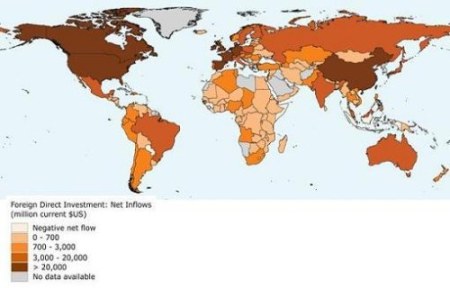
URL:http://jdasovic.com/2007/12/22/foreign-direct-investmentfdi-an-indicator-of-globalization/

Friday, 3 October 2008

Gottfredson,M., Schaubert, S. and Saenz, H.(2008), New Leader’s Guide to Diagnosing the Business


If you are suddenly designated as a CEO of an organization, what do you do first? What ever do you think you should do? This is a guide for such a person who has no time to make his/her business plan for the organization.

The guide forms a diagnosing test; understanding an advantage and disadvantage of a firm thorough a comparison with its competitors. The template has following four principles;

1, Cost and prices almost always decline.
Understand cost and cost structure of your firm, competitors, and market. Forecast the future with Learning Curve.

2, Your competitive position determines your options.
Figure out the market; trend, potential, and profit. Position your firm and competitors on market.

3, Customers and profit pools don’t stand still.
Comprehend customer’s preference and priority of service and compare your firm with competitors in customer’s evaluation. See market profit structure with cost and profit mapping.

4, Simplicity gets result.
Simplify process; process of decision making for firm and its customer.


These template is not enough, but useful to overview some organization quickly. Most interesting for me is this template mainly uses comparison. It might correspond with the argument of utility of ordinal number and utility of cardinal number.


URL:http://harvardbusinessonline.hbsp.harvard.edu/b01/en/common/item_detail.jhtml?id=R0802C

Emerging MNCs

Today(=Sep 29)’s class was taken in Ru, which had not been mentioned in the syllabus. I had to look around before the class, and I could not discus about today’s topic with other student.

Today’s material is one of HBS Cases; Hikma Pharmaceuticals, a multinational drug producing company originated in Jordan. The Case ended when Hikma got two offers from U.S. distributor and asked readers “Which choice do you recommend?”.

What impressive was that, teacher needed us to judge by ourselves saying “What is your impression?”, “Is it good or bad?” and, ”What do you recommend?”. I remarked twice, but I failed because I could not recognize his saying…

What I missed in the Case is human resource of company and difference in terms of patents among U.S, EU and DC. I thought I had to check information with some framework.


The lecture itself was not so exciting because choices of students were almost same and we could not spend enough time to discuss about that. However, if we had enough time to discuss, our thoughts would not dramatically improved because we don’t have job experience or study business administration. Every time I think, I hope to discuss more theoretically and with someone has management experience, of course I have to improve my English more and more.

Sunday, 28 September 2008

Lovas, B.and Ghoshal,S.(2000),Strategy as Guided Evolution


This is a thesis in Strategic Management Journal. The paper shows relation between strategic intent, top management, and human capital and social capital, organization and workers, and tries to make a model of it from an international company’s case study.

The model consists of follows;

・Objective Function(strategic intent)

・Source of Variation (all employees)
・Units of Selection (strategic initiatives, human and social capital)
・Agents of Selection and Retention (people working on strategic initiative)

・Administrative Systems (formal structure and organizational routines)

In this article, the model was inspected with the example of Oticon, Danish hearing aid company, and its reconstructing strategy and organization. The example is so interesting because it shows “Structure follows Strategy”. But it is so complex that author could not theorize the case sufficiently. I think studies of management became more difficult if more close it looks example. From the beginning, it is impossible to theorize activities of human beings. By the way, this thesis is hard to understand for me.


URL:www.thinkoticon.com/

Saturday, 27 September 2008

Magretta,J.(1998),Fast, Global, and Entrepreneurial: Supply Chain Management, Hong Kong Style


This is a record of an interview with Victor Fung who is a chairman of the Li & Fung, which is said as “Hong Kong based multinational trading company”in his words. As the title, the interview focused on “Supply Chain Management” and demonstrates its importance for global company in twenty-first century dates back to the Li & Fung’s history.

The Li & Fung’s started as an interpreter and a broker which mediated businesses between Chinese factories and American merchants. However, the fee of intermediate became squeezed and it has started to change the business model in three stages.

In the first stage, it became “a regional sourcing agent”, which tells buyers when and where they should start buying. This is valuable for buyers because exports were controlled by government with quotas and information of other country is complex. In the second stage, it became “a manager and deliverer of manufacturing programs”; not introduce best provider of ready-made products, but organize production process of new goods. In the third stage, it expand second model globally and started “dispersed manufacturing”, not construct whole value-chain but separate and integrate parts of it.

This is different type of global company, which does not own value-chain but “configure” and “coordinate” them. I think it seems similar to Japanese governments because they want to control industries they taking charge of and collect more information about the industry than any other.

URL:http://openlearn.open.ac.uk/mod/resource/view.php?id=177167

Friday, 26 September 2008

Li & Fung: Beyond “Filling in the Mosaic”, 1998-1998(HBS Case 9-398-092)


This is a case of Li & Fung Group, a Chinese textile company which is run by two brothers who have Ph.D. at Business Economics at Harvard University or MBA at the Harvard Business School. The article describes the firms from its start up to 1998, when it has established and making strategy for twenty-first century.

Li & Fung’s business model is “a virtual factory” or “private label manufacturing program”, means it specializes providing product itself, not brand or promotion. Though there is big scale merit in production of textile industry, it is difficult each company has big factory because there are lots of competitors and fashion of the clothes are always changing. For company which has good talent of design or marketing, it is better not having its manufacturing and outsourcing it. This is why Li & Fung is needed from many customers and Li & Fung has developed the relation through its network to get the textiles at high speed and good quality in lowest cost.

Li & Fung’s strategy is the 4Cs;.
1,Connection
2,Communication
3,Control of quality
4,Consolidation of shipments

Its way of business is simple, developed good manager and construct reasonable evaluation, collect information and invest promising company. But most interesting for me is it made investing company, LFI, to find customer in future and collect money. In the twenty- first century information is important but collect information only is so costly. To have invest company is good strategy for other company, I think.


URL:http://www.lifung.com/eng/global/home.php

Thursday, 25 September 2008

Overcoming the Liability of Foreignness


Yesterday’s IBS lecture was about Hartford Part2, challenge and strategy of foreign country. The lecturer was also PhD student. The lecture was so systematic that we could easily tell how he would organize next. Some of my friends complained about that, but for me, it was good because it was easy to understand.

The conclusion is “Foreigner should understand how it are seen by host country, and exploit its advantages and mitigate its disadvantage”. Foreign firm usually have both of negative and positive image. Hartford success in Japan was archived by the reducing negative image such as unreliable by communication with government or compliance and using local network, and using its “innovative” image for partnership with Nikko and relationship to government which wanted to make its market more competitive.

Looking back on the case, it was so beautiful because its strategy was easy to understand and actually, the strategy has worked well. I think this was the reason why PhD student took this lecture.


URL:http://metacool.typepad.com/metacool/page/2/

(It is just "beautiful" image, does not directly relate this post)

Tuesday, 23 September 2008

Collis, D.J.and Montgomery, C.A(1995),Competing on Resources: Strategy in the 1990s.


This is one essay of the Harvard Business Review, use easy words to read or understand. In the first part of the article, it describes the changing stress of “Strategy”, from market structure to resource of a firm and integration of both. In main part, it tells us( mainly for manager of companies) how to capture “Core competence”(it says “distinctive competence”) with some active examples.

The role of manager is so important to make strategy and keeping the firm profitable in the competition, as the essay says. In making strategy, it is important evaluate the firm, typically core-competence. However, managers often make mistake in the process. This article gives them solutions.

First of all, managers have to know what makes a resource valuable, they are following;
・Demand(does it meet customer’s needs, and is it competitively superior?)
・Scarcity(is it imitable or sustainable, and is it durable?)
・Appropriately(who owns the profit?)

Second, they should ask following questions;
1、 The test of inimitability: Is the resource hard to copy?
2、 The test of durability: How quickly does this resource depreciate?
3、 The test of appropriability: Who captures the value that the resource creates?
4、 The test of substitutability: Can a unique resource be trumped by different resource?
5、 The test of competitive superiority: Whose resource is really better?

Of course, these questions have to be asked continuously, because firms and markets are always changing.


URL:http://www.fsc.yorku.ca/york/istheory/wiki/index.php/Resource-based_view_of_the_firm
Barom,D.P.(1995),Integrated Strategy: Market and Non-Market Components


This is an article for international business especially in “Non-market strategy”. “Non-market strategy” means market environment or outside of the market such as interactions that are intermediated by the pubic, stakeholders, government, the media, and public institutions. This is important especially for firms that act internationally or sensitive business such as biology or medicine, deeply effected by law or tariff.

This view is very interesting for me because I thought such “non-market” activity was seen only in Japan. The thesis says it is important to build good non-market strategy and integrates it to market strategy. In addition, the saying ”competitors of a market is allies of the non-market”, that means non-market’s externalities, is also interesting.

Regrettably, however, this can not clearly explain relations to Porter’s Five Forces. The Five Forces assume market environment as stable or receive through the Forces. I think non-market strategy is on different dimension from the Five Forces.


URL:http://www.soccerbusinessonline.com/soccer/Soccer09/Resumen_NONMARKET09.asp

Monday, 22 September 2008

Liability of Foreigness

Today’s lecture was so easy to understand for me, because it was about Japanese case, the entry of Hartford Life Inc. to Japanese annuity market.

Of course, I spoke something in class, and indicated a mistake in the article of Japanese government’s name, FSA (is not Financial “Supervisory” Agency, but Financial “Service” Agency).

The teacher, he is PhD. student and not regular lecturer, was good than I had expected. He started the lecture describing the characters and environments, this is very orthodox. One thing I minded was we could see what was the “right” answer, or what he expected, it was a kind of “too organized” lecture. However, it was so interesting in the last part of the lecture, we talk about the example of disadvantages of foreigners, because there were student from different countries.

I think the requirement of good lecturer is “to exploiting audience competence”. This is very difficult, but someday I hope to get the ability.

Saturday, 20 September 2008

Case:Hikma Pharmaceticals(HBS Case 9-598-019)


Can vision change?


This Case is about Hikma Pharmaceticals, a pharmaceutical company in Jordan, also going international.

The purpose of company was “an Arab company that serves the Arab world”, but it has changed because Arab market was not so profitable. This was the trigger that the firm expanding Europe and United States.

This case is ended when the CEO of the company got two offers of buying the products, and student can discuss about which offers better. However, neither offer is good I think, because the firm has lost its vision no longer, its nonsense to discuss about un-visionary company.

Friday, 19 September 2008

Brannen,M.Y.(2004),When Mickey Loses Face: Recontextualization. Semantic Fiat, and the Semiotics of Foreignness


If you have fallen in love with a girl, what do you do next? Do you mail her? Do you ask for a date? Do you propose to her? Of course, it is important to know about her, character, liking, cultural background, address, impression for you, and so on, but to know everything about her is difficult, and if she is so charming, someone might get her when you collecting her information…


This article is about international management, especially in a process of MNE’s entry in different culture, in the use of Disney’s. This is interesting because author uses linguistic method or frame work.

The conclusion is “to know everything about country or people to enter, and always carefully observe them”. This is true and important, but difficult for companies because they have so much time or money to spend. Important thing is not language but more watchable thing or aspect, I think.


To get her, not observation but direct action is important, I believe.


URL:http://www.biwa.ne.jp/~mickey32/sub1-9-tdl.htm