Tuesday, 7 October 2008

“Ehrenreich feedback”


It was a week from last attendance to today’s business English class. Today’s title was “Ehrenreich feedback”, return of in-class writing test. However, we mainly discussed about some mistakes of sentences and a pun, because the result was returned at the last time of the class.

In the discussion about checking sentences, I felt my lack of vocabulary because I could not understand some of sentences. Besides, I ashamed I did not ask fluently or collect grammar. Other student, probably Swedish, spoke English so well and they adjusted to presentation. They not only pointed mistakes but also made another sentences and suggested in class. I did not have such ideas, and I will try next class.

After discussion, teacher explained about a pun; a joke that involves a play on words and fact that words can be ambiguous. It might be fun for English speaker, but for me, it was not fun because I could not understand some of them.

Fortunately, I will have a short meeting with teacher on next Monday. I will ask how to improve and train my English.


URL:http://user.aol.com/punamerica/

Monday, 6 October 2008

Hybrid MNCs


I have not attended classes for a week because I had to get back to Japan for job interview and the ceremony. Because of the long absence, I felt hard to catch up with the class, and I could not contribute class discussion.

Today’s Case was about Li & Fung, multinational clothes and toys company which originated in Hong Kong. Li & Fung’s business model is unique because it does not own its factory or store or natural resources. It acts in several place of value chain and make money though optimization the whole chain; with no-inventory, flexibility, and so on. Moreover, the activities are driven by customer value or satisfaction, with structure of organization and system of evaluation.

The lecture started with describing business model of Li & Fung by three students. The students wrote almost same picture and they were well. But I thought last one was best because it was so visual, and funny, and what’s more, explanation was good. I understood what is important in speech was calmness and emphasizing points of the opinion.

From this lecture, I got three things; figure, view as industry, and factor analysis. Figure means to judge and compare with number such as 3.5% margin comparing 1%, 5 weeks vs 3 months. Second means to have other view to see case; for example, firm level, industry level( of course, there are many dimensions of industry), country level, and so on. It provides valuable opinion and thoughts I believe. Last was about MECE. In every lecture, professor shows us the factors that we do not point out. If we have some framework or analysis of factors, we would fill all the factors.

Back to the Li & Fung, its point of business were: co-produce with customers, knowledge and information as competitive advantage, customer driven organization, support player of value-chain. I think this is just business model of 21st century, and in future, companies will change as this.


URL:http://www.market-modelling.co.uk/MMS/MMS_ValueChain.htm

Oral presentation.


In lunch time, I attended a company presentation; Rothschild. Of course I know the name in some novel, but I had not known it still runs as a bank with some intellectual services.

The presentation was unique because Managing Director did not use any power point or notes or white boards, but use his own voice and gestures. His speech was well and attractive and he emphasized on goodness of training of firm, attractiveness of London financial market, importance of communication, and how to overcome pressure in the job. I thought he tried to offset negative images of invest bank, even though the firm is not invest bank, as he said.

What was unexpected for me he praise SSE, some of alumni are flourishing in London. Because my school, the University of Tokyo, is so established school and there is no need to emphasis on excellence of the alumni. Besides, most firms come to my school are Japanese company; there is no competition among countries.

For me, although there is no need to find job for some time, it is important to improve always skills to independent from an organization and the fluctuation of the economy.


URL:http://concernedhumanity.net/economy.html

Saturday, 4 October 2008

Henry Mintzberg (1994)”The Fall and Rise of Strategic Planning”


This is a bit strange article for HBR, which usually shows us useful framework or systematic thinking. The article does not tell us utilities of frameworks but mistakes to depend on them. And finally, it says that useful frameworks weaken our thoughts.

“Strategic Planning”, as he says “strategic programming”, is the way to make strategy without doing or seeing its activity. The “strategy” contains schedule, budgets, target figure, and so on. However, he criticizes this way and strategy should be made in work spots not in an executive room. Moreover, in the first place, strategy is not necessary if there is concrete vision.

“Vision is unavailable to those cannot “see” with their own eye.”

His opinion seems to be radical, but actually he recognizes merits and demerits of some tool of thoughts, and warn us to think by ourselves and communicate with people.

It is first time for me to read his article, but I got to know why he is so popular. I want to read more about his idea and thoughts.


URL:http://www.amazon.com/Fall-Rise-Strategic-Planning/dp/B00005RZ4F

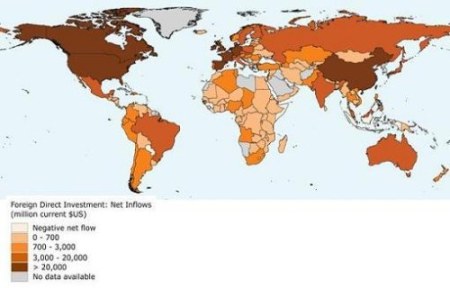
The Political Economy of Foreign Direct Investment, Ch. 7 in Hill, C.W.(2005)


This is a chapter of book for Political Economy, learning between politics and economy. It was interesting and familiar with me because I am studying agricultural economics and agricultural industry is often affected by politics.

The article explains basic theories and knowledge about FDI. It starts three main attitudes to FDI, and explains benefits and costs of FDI from both side of a host and home country.

There are three views of FDI. First is the radical view; negative attitude toward FDI, the free market view; positive attitude toward FDI, pragmatic nationalism; the thought that seeks national interest. For long years, countries adopted the radical view but now sifting to accept the free market view; results to adopt pragmatic nationalism.

In reading benefits and costs of FDI, I felt the difficulties of economy; its intangibility. FDI has both merits and demerits for both a host and home country and the nature has not changed for long years. However, the attitudes and receptions have dramatically changed for 20 years. I think this is because real effect of FDI is hard to evaluate and we have no choice but to be at the mercy of fashionable economists or economic theories.

URL:http://jdasovic.com/2007/12/22/foreign-direct-investmentfdi-an-indicator-of-globalization/

Friday, 3 October 2008

Gottfredson,M., Schaubert, S. and Saenz, H.(2008), New Leader’s Guide to Diagnosing the Business


If you are suddenly designated as a CEO of an organization, what do you do first? What ever do you think you should do? This is a guide for such a person who has no time to make his/her business plan for the organization.

The guide forms a diagnosing test; understanding an advantage and disadvantage of a firm thorough a comparison with its competitors. The template has following four principles;

1, Cost and prices almost always decline.
Understand cost and cost structure of your firm, competitors, and market. Forecast the future with Learning Curve.

2, Your competitive position determines your options.
Figure out the market; trend, potential, and profit. Position your firm and competitors on market.

3, Customers and profit pools don’t stand still.
Comprehend customer’s preference and priority of service and compare your firm with competitors in customer’s evaluation. See market profit structure with cost and profit mapping.

4, Simplicity gets result.
Simplify process; process of decision making for firm and its customer.


These template is not enough, but useful to overview some organization quickly. Most interesting for me is this template mainly uses comparison. It might correspond with the argument of utility of ordinal number and utility of cardinal number.


URL:http://harvardbusinessonline.hbsp.harvard.edu/b01/en/common/item_detail.jhtml?id=R0802C

Emerging MNCs

Today(=Sep 29)’s class was taken in Ru, which had not been mentioned in the syllabus. I had to look around before the class, and I could not discus about today’s topic with other student.

Today’s material is one of HBS Cases; Hikma Pharmaceuticals, a multinational drug producing company originated in Jordan. The Case ended when Hikma got two offers from U.S. distributor and asked readers “Which choice do you recommend?”.

What impressive was that, teacher needed us to judge by ourselves saying “What is your impression?”, “Is it good or bad?” and, ”What do you recommend?”. I remarked twice, but I failed because I could not recognize his saying…

What I missed in the Case is human resource of company and difference in terms of patents among U.S, EU and DC. I thought I had to check information with some framework.


The lecture itself was not so exciting because choices of students were almost same and we could not spend enough time to discuss about that. However, if we had enough time to discuss, our thoughts would not dramatically improved because we don’t have job experience or study business administration. Every time I think, I hope to discuss more theoretically and with someone has management experience, of course I have to improve my English more and more.